Team : 4 member team ( design + product + data + research)
Time : 2022 - 2025
Role : Lead Product designer
mission
attribution
attribution
attribution
attribution
attribution
attribution
+38%
attribution rate
+15%
click through rate

enhancing survey engagement & reducing survey drop off rate
Glance Pulse was a real-time
consumer insights platform
that leverages Glance’s lock
screen ecosystem to gather
fast, actionable feedback from
millions of users.
Disclaimer: If my portfolio feels a bit too ad-venturous, blame the side effects of inhaling AdTech fumes for years—no retargeting intended.
Rebuilding trust in performance Ads to
recover attribution at scale
My 3-Year UX Journey in Performance Ads one iteration at a time !
The Illusion of “One Click”
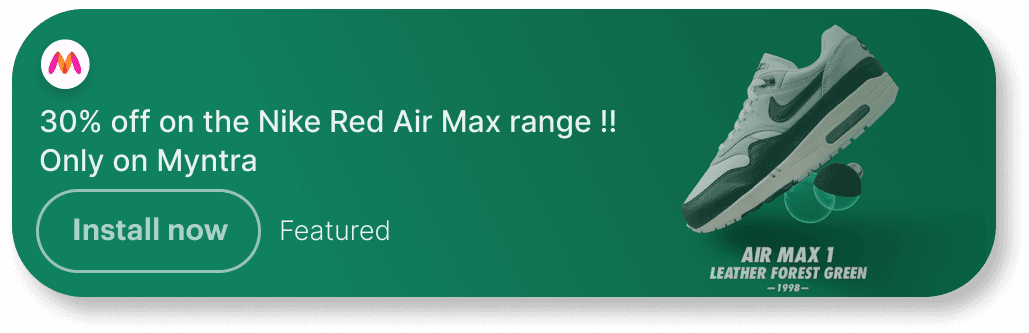
At first glance (pun intended), the One-Click Install (OCI) feature seemed like the ultimate convenience—seamlessly downloading apps from Glance with a single tap.
But beneath the surface of this frictionless experience lay a hidden challenge: Not enough attribution rates were being captured. Each missed data point was like a breadcrumb lost on the trail, leaving us with incomplete insights into user behavior and campaign success.
What was broken?
Click
(CTR = 0.1%–0.8%)
enhancing survey engagement & reducing survey drop off rate
Glance Pulse was a real-time
consumer insights platform
that leverages Glance’s lock
screen ecosystem to gather
fast, actionable feedback from
millions of users.
Confirmation
(5–15% drop-off))
Unlock
(12–35% drop-off)
Install
(only 50–70%
completed)
App Open / Attribution
(just ~20%
were getting monetized!)
Quality Install
(low lifetime value,
unclear intent)
What was broken?
Unlocking twice confused the hell out of everyone.
Users didn’t know where the app was coming from.
OCI was a leaky bucket. We weren’t just losing clicks. We were losing trust.
enhancing survey engagement & reducing survey drop off rate
Glance Pulse was a real-time
consumer insights platform
that leverages Glance’s lock
screen ecosystem to gather
fast, actionable feedback from
millions of users.
People installed apps… and never opened them.
“Install Now” and “Install Later” made zero sense.
Attribution broke — and advertisers walked away.
But in reality, it was leaking users at every single stage
Where i intervened with design and where i couldn't
I targeted all the six steps
1 - lock screen tap
2 - Confirmation
3 - unlock phone
4 - app install
5 - app open
6 - quality install
The business wake up call
By the time I took this on, attribution rates had dropped below 20%. That meant over 80% of installs weren’t being traced back to the ad.
For performance advertisers, that’s a dealbreaker. If you can’t prove value, you don’t get budget.
Attribution < 20%
Critical Signal Loss
Improve CVM
Mandate from Leadership
Build a Trust-Led Install Experience
Strategic Solution
My mission was to build a **reward ecosystem from scratch** inside Glance.
What was my product goal
I knew this wasn’t going to be a “ship it in 4 weeks” problem.
I wasn’t just designing screens
I was redesigning behaviour trust, and perception.
Make each step of the OCI flow feel expected
Remove friction without sacrificing control
Add clarity where the system was silent
Create a consistent, scalable UX across Xiaomi, Samsung, and Realme
What story did the users tell us again and again - our extensive research revelations !
Across 3 years, I led 4 major UX research cycles, with 14+ users, testing ads for apps like Myntra, Swiggy, Snapchat, and redBus.
We tested flows. We showed prototypes. We watched users freeze up on the same screens.
That’s how bad the experience was.This was a huge security and trust alarm which made the users instantly close down the experience
Subho P2
“If ads come frequently then its a problem”
Sukanya P4
“why am i unlocking my phone again ?”
Rajeev P6
" Ads come on the app after every 5 mins "
Shuhail P7
" is my phone being hacked "
Dhivya P5
“Is this from playstore ?”
Samshad P1
" Is this going to take up space ?"
Sukanya P4
" is my phone being hacked "
So we Rebuilt Retested Redesigned It in 6 Stages
Over 3 years, I designed and tested interventions at every stage of the funnel.
The funnel was broken
attribution rate
Here's how we rebuilt the plane while flying it
OEM Variability Made It Worse
Xaomi
Realme
Samsung
60 to 70 million users
12 to 15 million users
30 to 35 million users
App open - Attribution
Advertisers do not monetize just because the app is being installed !
Users have to open and do a conversion ... only then glance would get monetized for this OCI action
20 %
5
Quality install - KPI - Life time value
Users have to min have the app in their phone for 7 days , plus conversions
6
Install
In Mi install happens but most users forget this action and move on to next
70 - 50 %
4
Unlock
In Mi install happens but most users forget this action and move on to next
Pattern/ fingerprint unlock action
25 - 35 %
25 - 35 %
12 - 14 %
3
Confirmation
LS is a tricky space
Not All OEM have given Approvals have been given to Glance !
Click 2
15 %
5 %
9 - 10 %
2
Lock screen
LS is a tricky space, Not All OEM have given Approvals have been given to Glance !
Ls of a phone has many challenges time of absorption of data must be quick crisp
Click 1
0.8 %
0.8 - 0.3 %
0.3 - 0.1 %
1
The data above is purely for representation and explanatory and have been altered due to non disclosure agreement
Where i intervened with design and where i couldn't
This part of the flow was not able to reiterate or redesign because of OEM limitations
Almost on all cycles
1 - lock screen tap
2 - Confirmation
Most Design Intervention
3 - unlock phone
Least intervention
4 - app install
Major intervention
5 - app open
Major intervention
6 - quality install
Less intervention
Stage 1- Lock Screen: Increasing Intent
Key problem addressal
The lock screen was the first and most fragile moment of intent.
CTR ranged between 0.1% – 0.8% depending on OEM.
Users weren’t rejecting the ad.
They simply didn’t see enough value to act.


redesigned lo or lockscreen entry for performance ad ( one click install )
What all did i change
Introduced floating CTAs instead of static buttons
Strengthened visual hierarchy using contrast and depth
Context-triggered creatives (time of day, category affinity)
Reduced cognitive load by simplifying messaging
redesigned lo or lockscreen entry for performance ad ( one click install )
what was the outcome?
Higher tap-through confidence.
Lock screen clicks became intentional — not accidental.
Stage 2 - Confirmation: Designing Instant Trust
Key problem addressal
redesigned lo or lockscreen entry for performance ad ( one click install )
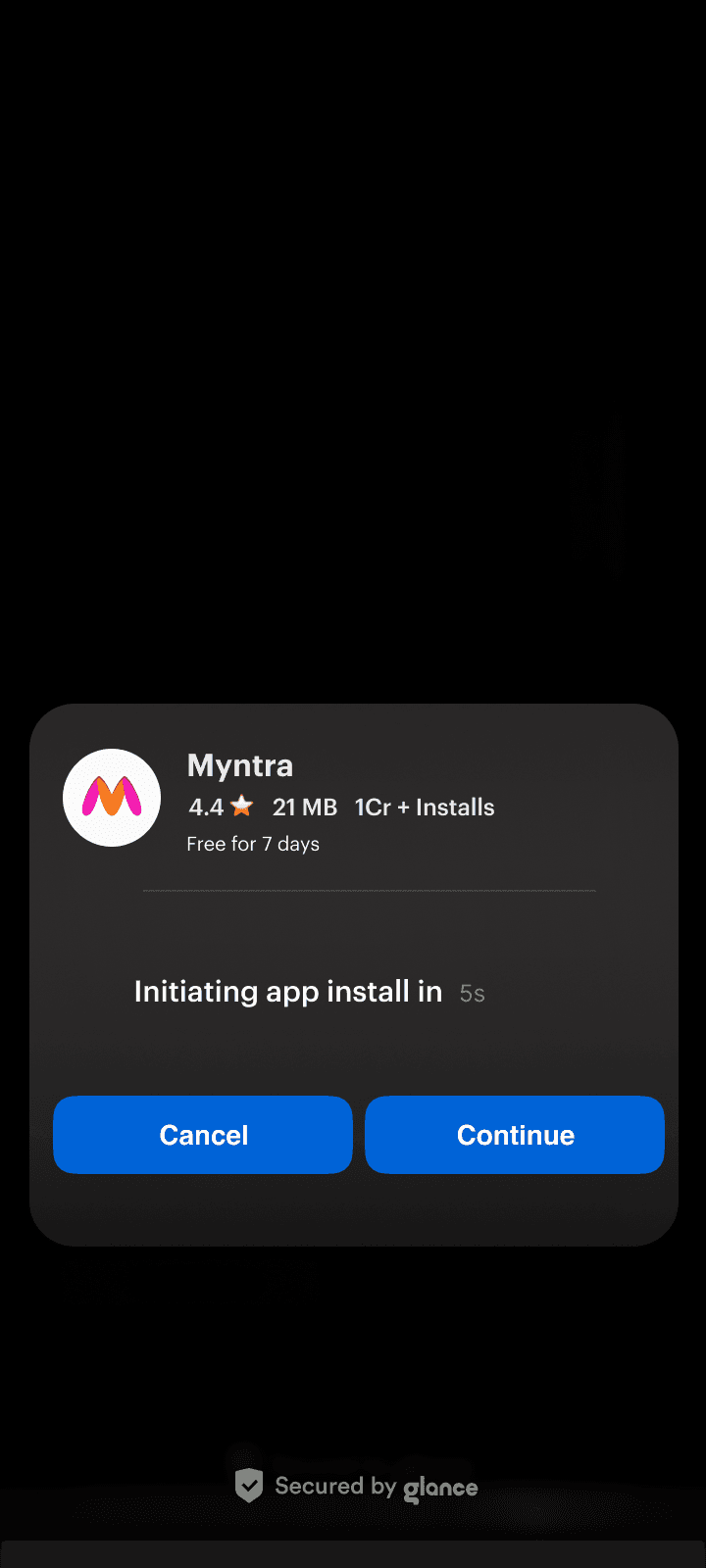
Questions we repeatedly heard:
“Where is this app coming from?”
“Is this the Play Store?”
“Is this safe?”
“Why is Glance installing something?”
Drop-offs ranged from 5% to 15% depending on device.
what i did & how did it effect
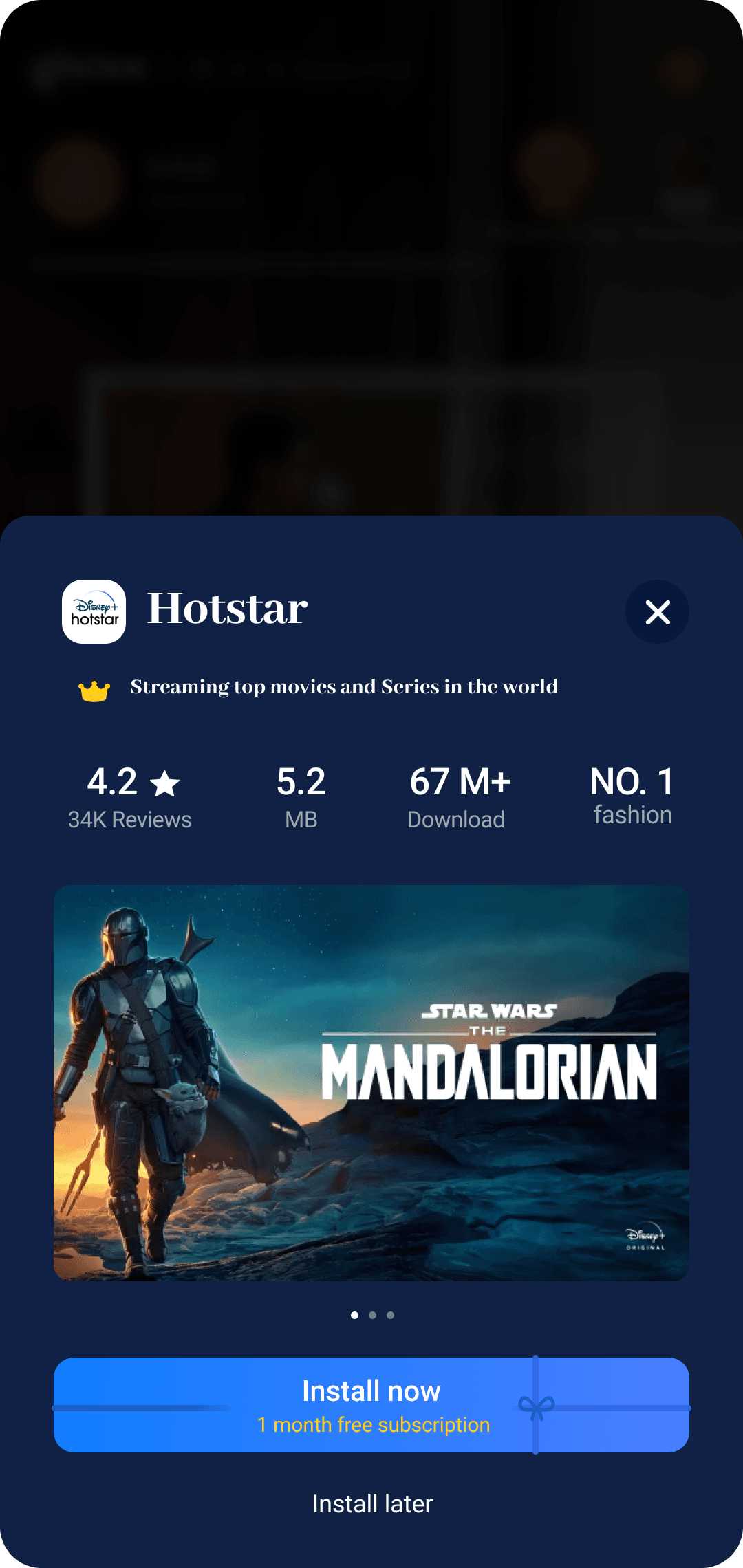
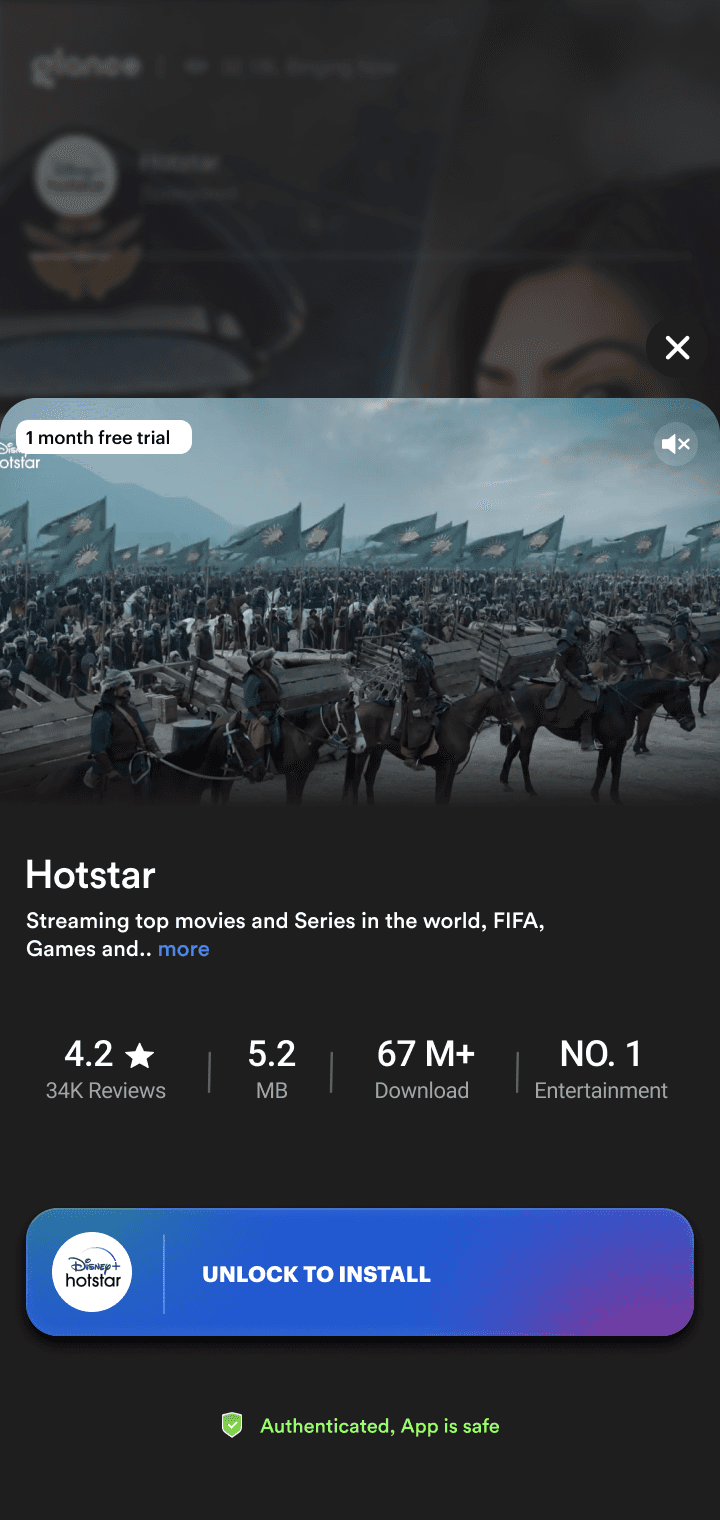
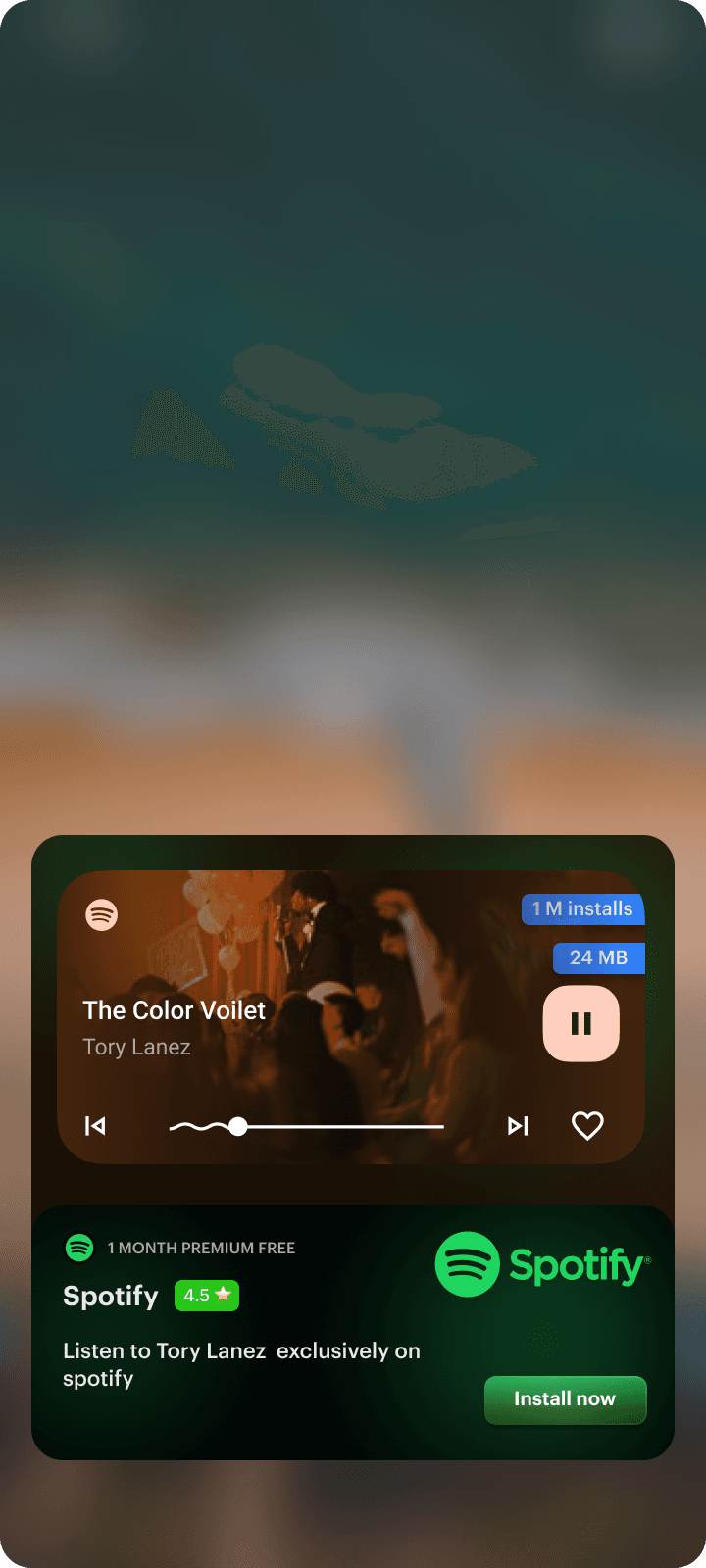
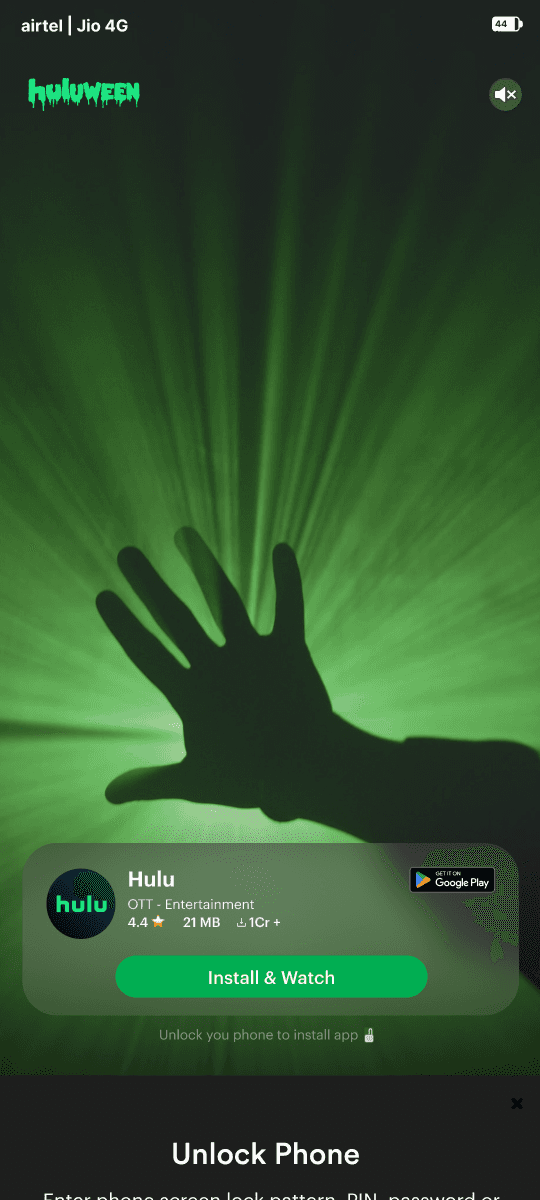
Stage 3 - Unlock: The Constraint I Couldn’t Beat
redesigned lo or lockscreen entry for performance ad ( one click install )
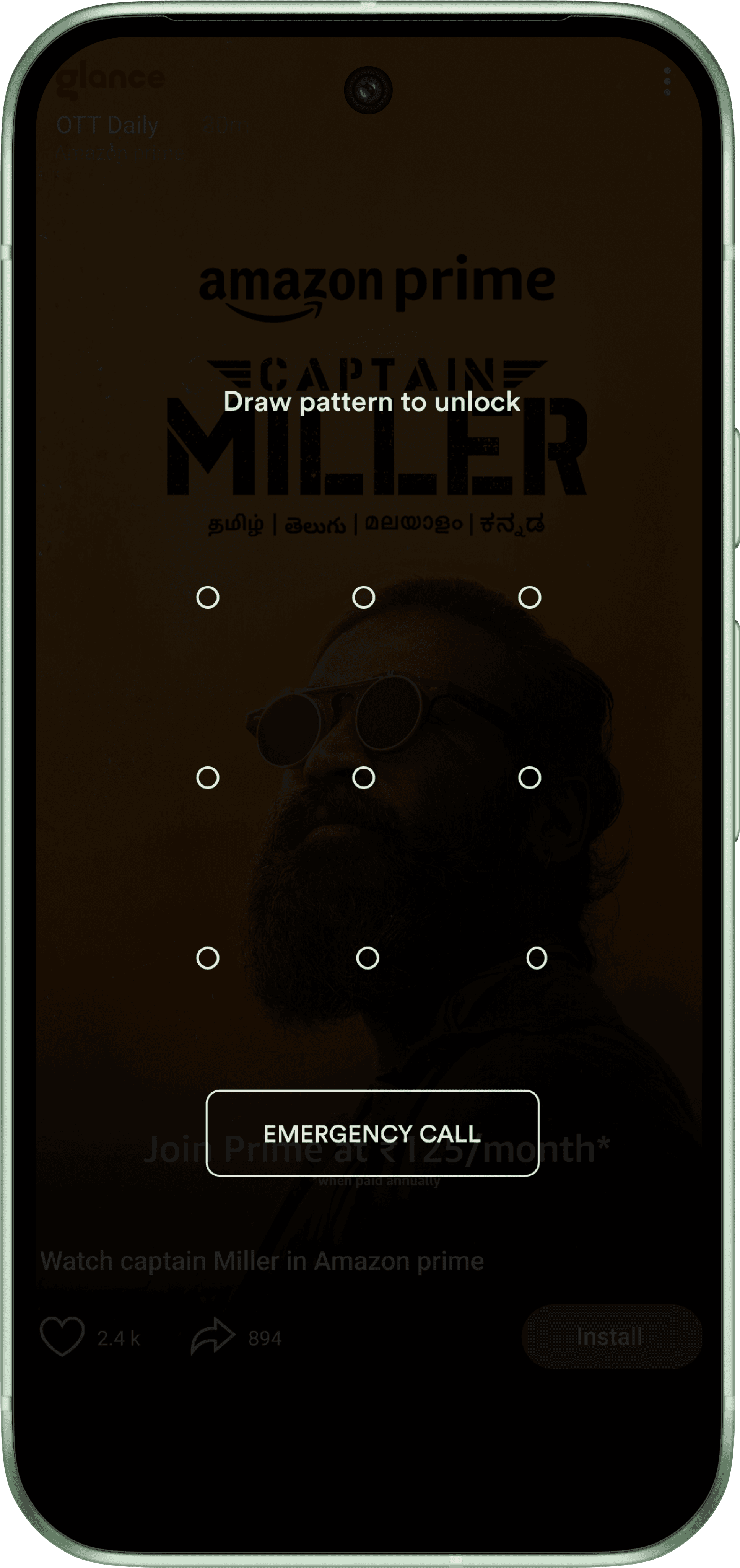
Unlock Stage – The Unmovable Wall
After confirmation, users were prompted to unlock their device again.
This triggered panic.
“Why am I unlocking again?”
“Is someone installing something without my permission?”
Drop-offs here ranged from 12% – 35%.
The Constraint
OEM-controlled surface.
No redesign allowed.
No flow modifications permitted.
What all did i change
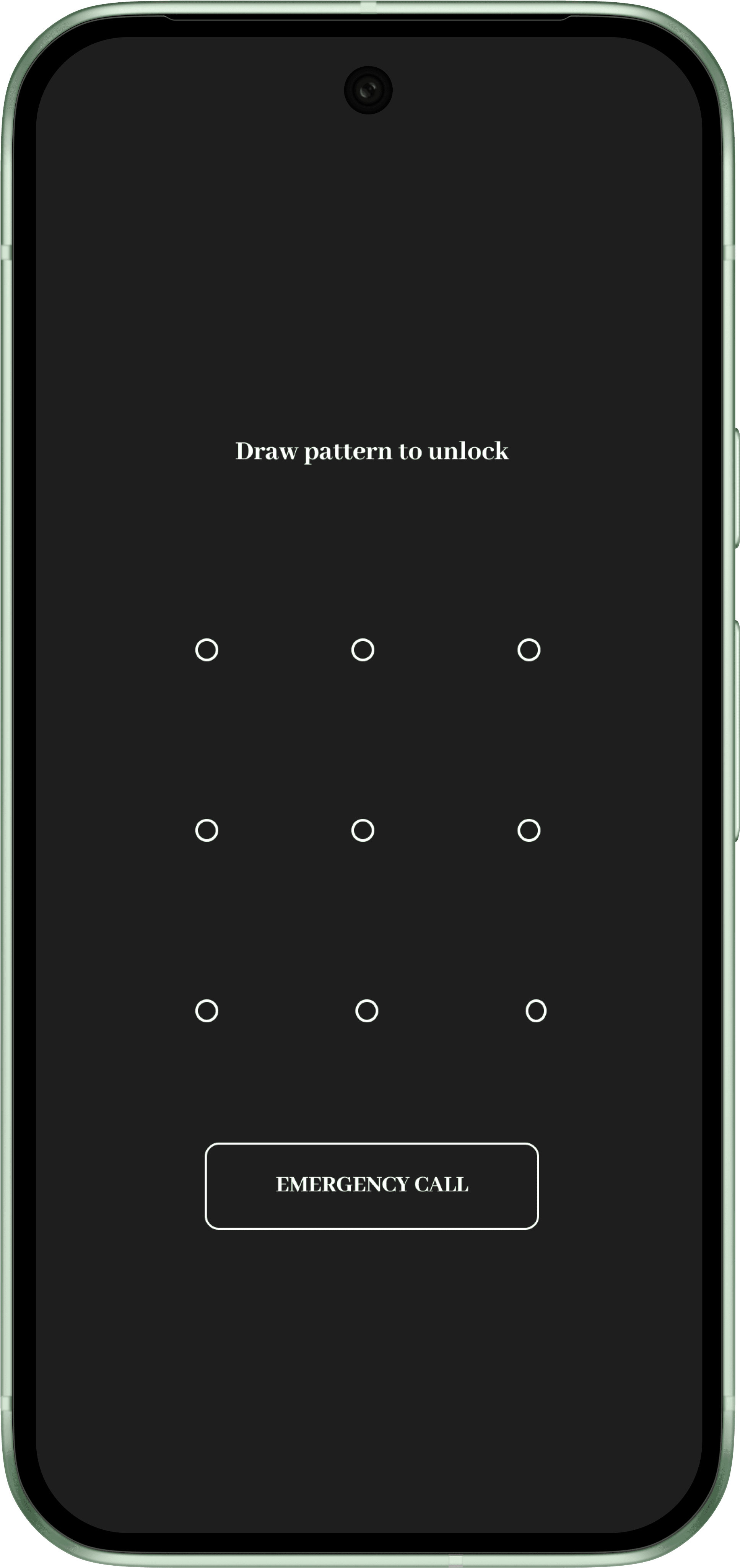
Why i couldnt change anything ?
OEM Controlled Surface →
No redesign, no flow changes allowed.
Designable Space
Intent Signal
Confirmation
Trust Stack
Pre-Install
In 3 years - this was the change i had fought to bring in after countless OEM teams meetings and presentations and rationales
Stage 4 - Install: Conversion ≠ Value
Context
Install completion ranged between 50% – 70%.
But install alone did not generate revenue.
Advertisers only monetized when users:
Opened the app
Completed a meaningful action
enhancing survey engagement & reducing survey drop off rate
Glance Pulse was a real-time
consumer insights platform
that leverages Glance’s lock
screen ecosystem to gather
fast, actionable feedback from
millions of users.
Subtle nudges had to be done since users moved past that particular story and time and was there at some other story consuming it ! hence the story had to be subtly brought in and a open CTA
What did i focus on
redesigned lo or lockscreen entry for performance ad ( one click install )
Strengthened post-install messaging
Aligned creative promise with actual app value
Reduced mismatch between ad expectation and app reality
What was the core problem
Users often installed but never opened the app.
Low post-install engagement meant:
Poor CVM
Weak attribution proof
Budget risk
Stage 5 — Attribution: The Real KPI
Team : 4 member team
Time : 2022 - 2025
Role : Lead Product designer
redesigned lo or lockscreen entry for performance ad ( one click install )
What we all wished for
Before intervention, only ~20% of installs were being monetized.
Attribution was collapsing.
And without attribution, performance budgets shrink.
What all did i change
This wasn’t a tracking problem.
It was a behavior + perception problem.
If users didn’t:
Trust the source
Open the app
Stay engaged
Attribution would fail.
Impact
+38% attribution improvement
Recovery of measurable value
Advertiser confidence restored
Attribution followed clarity.
Stage 6 — Quality Install: Optimizing for Lifetime Value, Not Vanity Metrics
What did i focus on
For performance advertisers, install volume is meaningless without downstream value.
A “quality install” meant:
7+ day retention
Meaningful in-app engagement
Signal strength for bidding algorithms
Higher probability of monetizable events
Volume without quality weakens the entire performance loop.
redesigned lo or lockscreen entry for performance ad ( one click install )
The Real Challenge
Most acquisition funnels optimize for CPI.
But sustainable performance requires optimizing for:
Predicted lifetime value (pLTV)
Post-install event density
Behavioral signal integrity
If users installed accidentally, confused, or misled —
retention collapsed.
CVM weakened.
Attribution degraded.
Performance wasn’t a UI problem.
It was a signal quality problem.
Business Impact
Improved return usage rates
Stronger 7-day retention signals
Higher post-install engagement density
Recovery in advertiser confidence
redesigned lo or lockscreen entry for performance ad ( one click install )
Before
Click
Install
Drop
After
Intent
Install
Engage
Attribute
Value
Impact — Recovering Signal at Scale
+38%
Attribution
Signal
Recovered by rebuilding
trust upstream
38%
Confirmation
redesign
Budget Confidence Restored
Performance became defensible again
Post-Install Behavior Improved
App Open
CVM
Retention
+15% Confirmation Rate
Reduced OEM volatility
Before
After
Three Years Later — What Still Didn’t Change
OEM unlock unchanged
1
Overlay restrictions persist
2
Device variability remains
3
Some friction is architectural.
Designing for Signal,
Not Screens
+38% attribution recovery
Collapsing signal
Recovered signal
Attribution collapsing (~20% monetized)
Weak signal = shrinking budgets
Rebuilt upstream trust layers
redesigned lo or lockscreen entry for performance ad ( one click install )
UX Layer
Interface clarity & expectation setting
Signal Layer
Improved confirmation integrity & CVM
Economic Layer
Stable attribution → defensible budgets
Trust is an economic lever
Attribution begins as perception
Signal integrity drives auction confidence
UX is inherently cross-functional
Constraints sharpen product thinking
Key Strategic Shifts
redesigned lo or lockscreen entry for performance ad ( one click install )
Stopped designing screens.
Started designing signal.
Clicks ≠ Value
Signal Quality = Auction Confidence
Some friction is
architectural.
OEM Unlock
Double Unlock
Overlay Limits
Improved return usage rates
Stronger 7-day retention signals
Higher post-install engagement density
Recovery in advertiser confidence
Business Impact
redesigned lo or lockscreen entry for performance ad ( one click install )
Before
Click
Install
Drop
After
Intent
Install
Engage
Attribute
Value
From One-Click Install To
Intent-Aligned Acquisition
Trust is a
performance lever.
Trust
Signal
Budget
From One-Click Install
to Intent-Aligned Acquisition
Expectation clarity
Performance UX is
system design.
Design for signal.
Design within constraints.
Design for economic trust.
read next
read next curated case study